What to do right now
- 1
Stop the water
Close the shutoff valve behind the toilet, or lift the tank lid and press the flapper down.
- 2
Do not flush again
More flushes add water to a bowl that is already full.
- 3
Contain the leak
Place towels around the base and keep the floor dry.
- 4
Clear the clog if it is simple
A flange plunger works on most toilet clogs. Use steady pushes, not quick stabs.
- 5
Watch the base
If water appears at the base while you plunge, the seal has failed.
Why a toilet leaks at the base
| Cause | Sign | Fix |
|---|---|---|
| Failed wax ring | Water around the base, especially after flushing | Reset the toilet with a new seal |
| Loose closet bolts | Toilet wobbles, base drips | Tighten, or replace the bolts |
| Cracked flange | Persistent leak, toilet rocks | Repair or replace the flange |
| Condensation | Wet only in humid weather, tank cold | Insulate or use a tank liner |
| Tank or supply leak running down | Drips traced from above | Replace the line or gasket |
A leak that appears only after flushing is a strong hint of a seal problem. Condensation is dry after the weather changes.
How a clog and a leak connect
A clog can raise pressure in the trap and bowl, pushing water past a worn seal. A leaking seal can also let waste seep out beneath the toilet, which looks like a clog problem but is not. If the toilet drains slowly but the leak continues once the clog is cleared, the seal is the culprit.
A toilet that clogs often may have a problem beyond the bowl, such as a partial blockage in the drain. When several fixtures are slow, read about sewer line cleaning.
Old floors and old flanges in Bridgeton houses
Bridgeton incorporated as a city in 1865, and bathrooms in older houses are often remodeled over the years. A closet flange sitting on an old board floor can rot, and a leak at the base gets into that subfloor and softens it. If the floor around your toilet feels spongy, stop using it and call. Toilet installation follows New Jersey's plumbing subcode (N.J.A.C.
5:23-3.15), and federal standards cap how much water a new toilet may use per flush.
A drain with a rough interior can catch paper. If your toilet clogs often, a camera look may find a rough joint or a root. Ask the Bridgeton construction office whether flange or floor repair needs a permit in your case.
If your toilet is in Upper Deerfield Township and you are on a septic system, tell us before the visit, since a frequent clog can also mean a full tank. Vineland homes on city sewer follow the Bridgeton advice.
Resetting the toilet
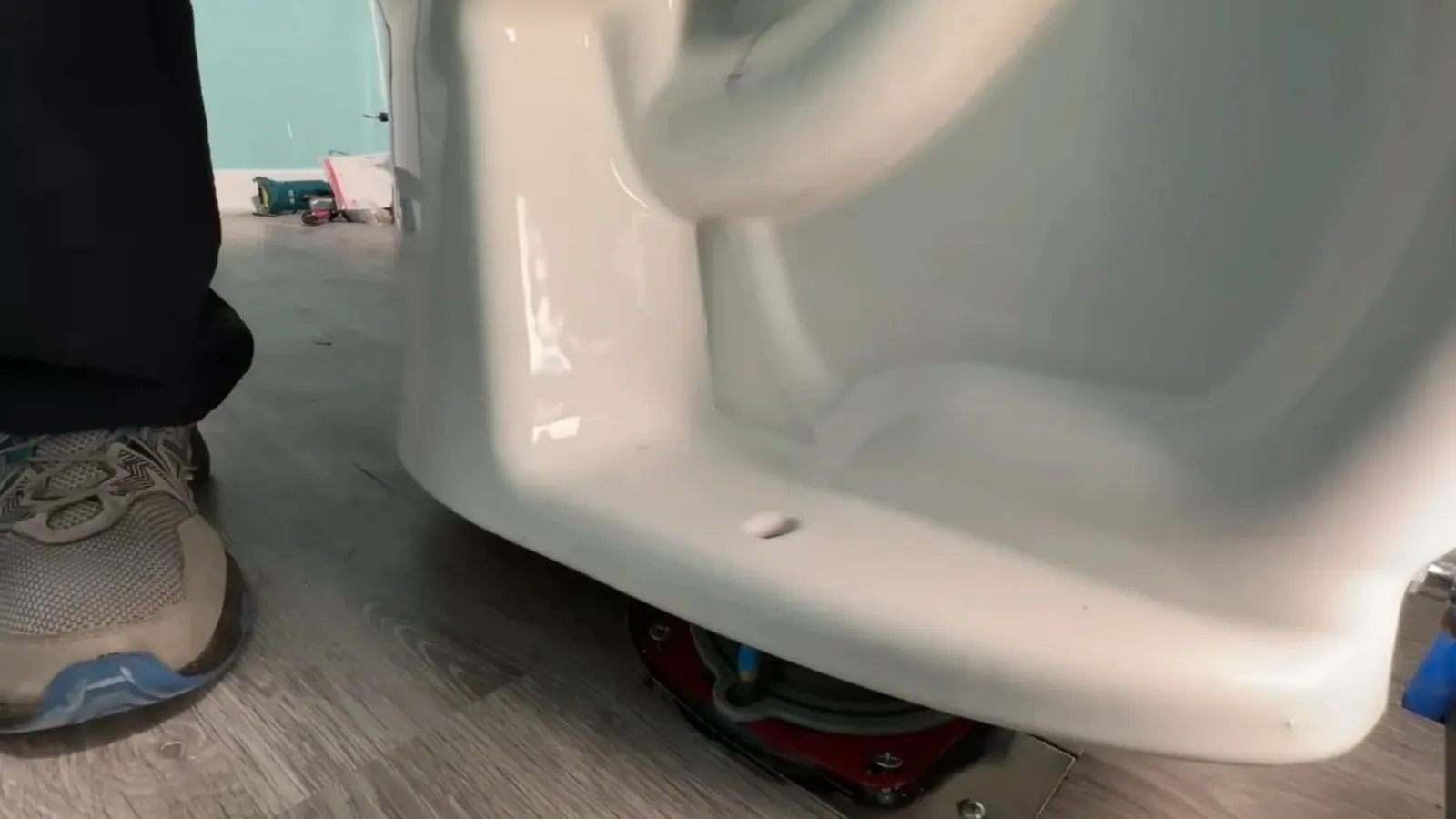
A reset means lifting the toilet off the flange, removing the old wax, checking the flange and floor, installing a new seal and setting the toilet back down. Check the flange for cracks and the floor for soft spots. If the floor is soft, the leak has been going on for a while, and repairs may be needed before reinstalling.
Tighten the closet bolts evenly, alternating sides, and stop when snug. Over-tightening cracks the porcelain. Test several flushes and look around the base after each one.
What affects the cost
- Repair or replace. A seal reset costs less than a new toilet.
- Flange condition. A broken flange or rotted floor adds work.
- Clog severity. A hand auger is simple, while a drain stoppage is a larger job.
- Access. Upper floors and tight rooms add time.
- Hour of the call. After-hours dispatch can be priced differently.
We give you a clear price before work starts. Call (856) 250-1784 for your situation.
Tools worth owning
A flange plunger, which has a rubber flap that fits into the toilet drain, works better than a flat cup plunger. A closet auger, also called a toilet snake, reaches deeper and has a protective sleeve that prevents scratching the porcelain.
A box of new wax rings in the basement closet makes a reset easy. Spare closet bolts and a few plastic shims round out the kit. None of these costs much, and together they handle most bathroom emergencies.
When the clog is not in the toilet
If the shower, sink and toilet are all slow, the blockage is farther down the line. If a first-floor toilet gurgles when you run a basement sink, the vent or the main may be blocked. A toilet cannot flush into a full pipe.
In those cases, plunging only wastes time. Call for a drain visit, and keep the toilet closed until the line is clear.
Prevent the next one
- Flush only toilet paper and human waste.
- Skip wipes, even those labeled flushable.
- Check the base for moisture every few months.
- Do not use harsh chemical cleaners in the bowl.
- Replace the wax ring whenever the toilet is lifted.
A little attention saves a subfloor.
Questions about this topic in Bridgeton
The plunging may have loosened a worn seal. A reset with a new wax ring fixes it.
Yes, but if water appears at the base, the seal has failed. Stop and fix it.
Condensation appears on a cold tank in humid weather and disappears when conditions change. A leak returns after every flush.
A leak you cannot stop or one that is soaking a floor is. A slow seep can wait for a visit, but not for long.
Many last for years, and a toilet that rocks wears it out faster.
Yes. We check the flange and subfloor, which are often the real issue in older houses.
Toilet leaking and clogged?
Call to book a repair visit.